AI Transparency and Explainability in Audit Contexts
Auditors need to defend AI decisions to regulators, not just understand them.
Marcus Halloran
Staff Writer
Marcus Halloran covers aiuc-1 and ai assurance, soc 1 & 2 and nursing facilities for Accounting Letter.
22 stories
Auditors need to defend AI decisions to regulators, not just understand them.
Traditional audit misses AI drift, bias, and opacity that new standards must address.
Overhauls how enterprises audit AI agents that make decisions autonomously.
Find gaps in your controls before the auditor does.
You can't rely on a SOC report alone without implementing your own required controls.
ISO 42001 now shapes how auditors scope, evidence, and report AI governance maturity.
Audit firms must choose an AI risk framework now, before regulators set the rules.
Service organizations design controls assuming you'll run complementary controls on your end.
Improper MDS coding drives $5.6 billion in SNF overpayments annually.
Facilities that break accounts receivable by payer cut collection time and reduce financial risk.
Improper payments at nursing homes tripled in three years; here's how to prepare.
Redesigning your chart of accounts now ensures Medicare reimbursement accuracy under new rules.
Auditors use materiality and pervasiveness to decide between five opinion types.
Auditors often check the audit risk formula without using it as an integrated decision system.
Auditors control detection risk when they cannot reduce inherent or control risk.
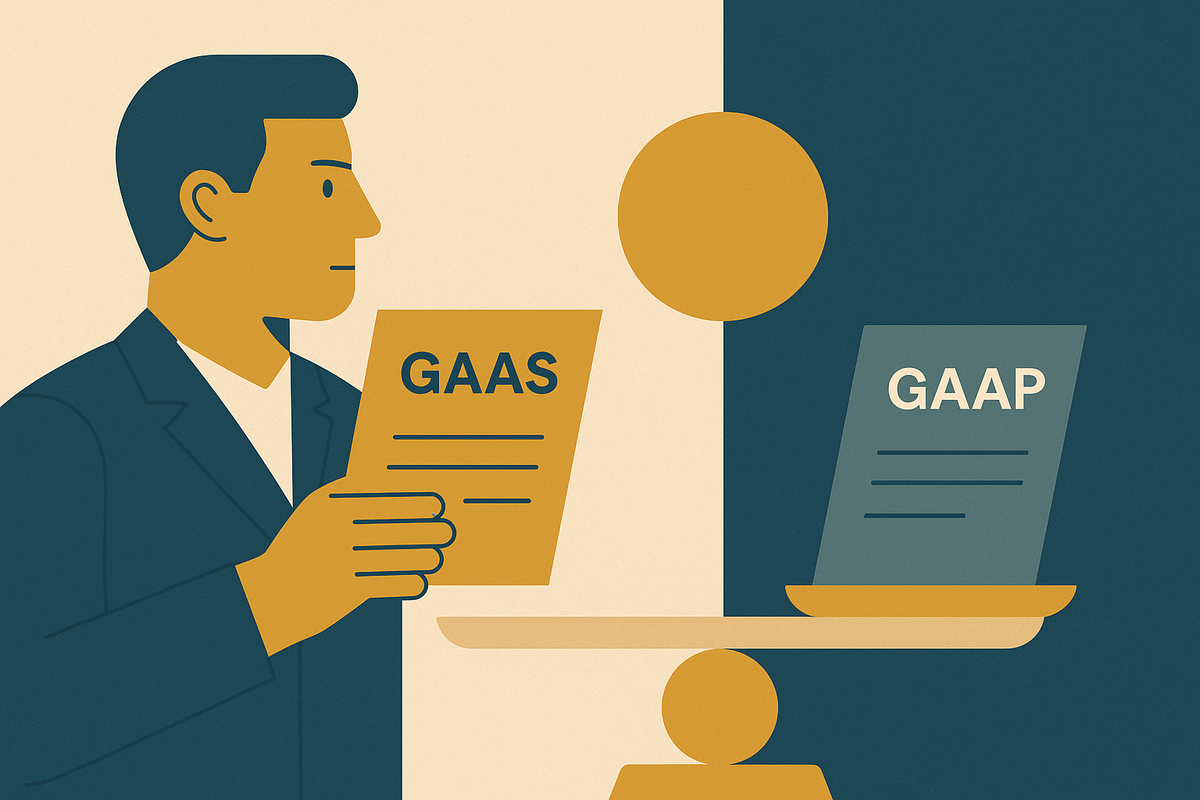
GAAP sets the rules for what gets reported; GAAS sets the rules for how audits verify it.
Understanding the four audit opinion types helps stakeholders decode financial reliability.
SAS 134 restructures audit reports fundamentally, not just updating the opinion language itself.
Compliance scope in GAGAS audits extends beyond financials to laws, regulations, and federal awards.
GAAP compliance alone won't satisfy auditors—you need documented processes and reconciled accounts.
Design flaws in controls can't be fixed by consistent execution, no matter how perfect.
Failed controls force auditors to test transactions directly, driving up audit costs and scope.