Auditor Independence Requirements Under GAAS
Auditors must satisfy both objective independence and the appearance of it simultaneously.
Daniel Adeyemi
Section
15 stories in Financial Statement Audit.
Auditors must satisfy both objective independence and the appearance of it simultaneously.
Auditors use materiality and pervasiveness to decide between five opinion types.
Auditors must independently verify management's going concern analysis and disclosure.
Auditors often treat risk components as independent checkboxes instead of interdependent levers.
Auditors use nested thresholds and qualitative judgment, not formulas, to determine what matters.
Auditors often apply the risk model correctly on paper yet still miss material misstatements.
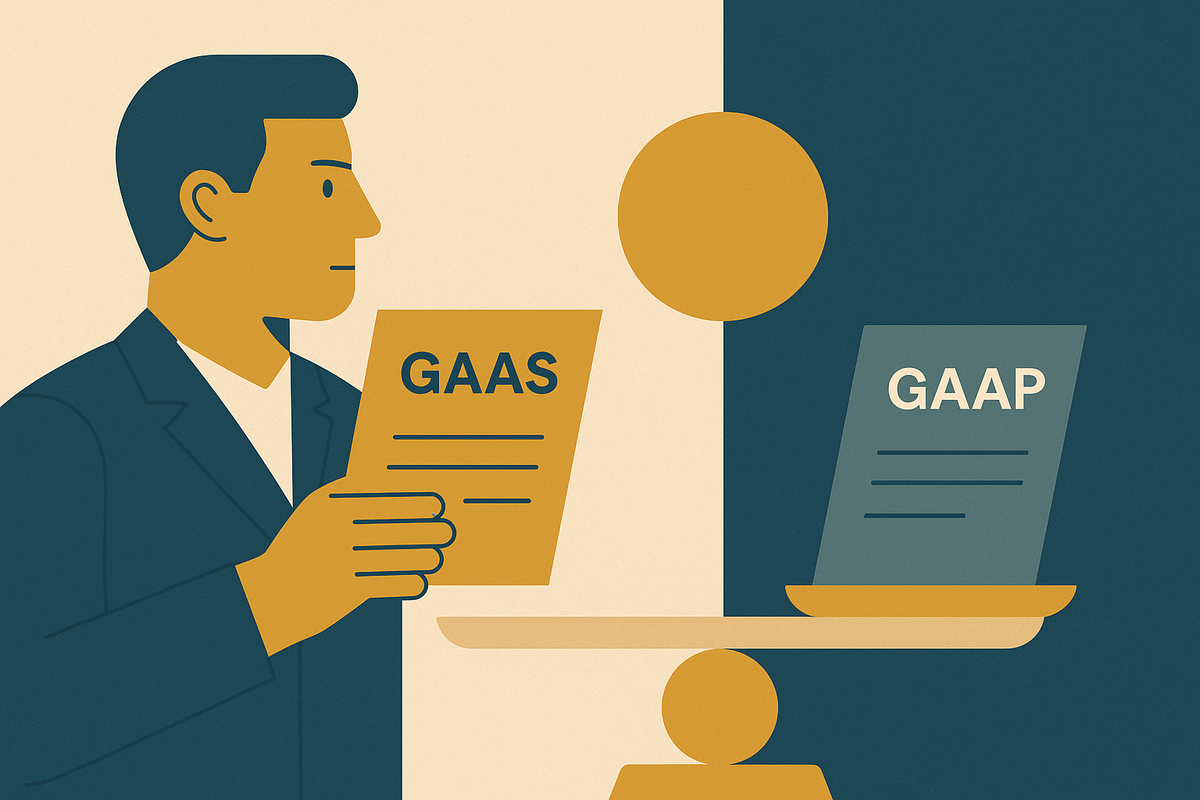
GAAP sets accounting rules; GAAS sets the standards auditors follow to verify them.
When auditors can't trust financial statements, lenders and investors will exit immediately.
The opinion moves to the front, but the real compliance work happens in the structural overhaul.
GAAP compliance doesn't equal audit readiness, and the gap costs companies dearly.
Design evaluation must prove the control catches the risk it's meant to address.
Failed controls force auditors to dig deeper into transactions and expand audit scope significantly.
Persistent audit failures cluster in areas requiring judgment, not competence.
Early preparation and a designated project lead materially compress audit timelines.