Auditing AI Model Training Data Integrity
Most organizations lack the audit infrastructure to verify what data trained their AI models.
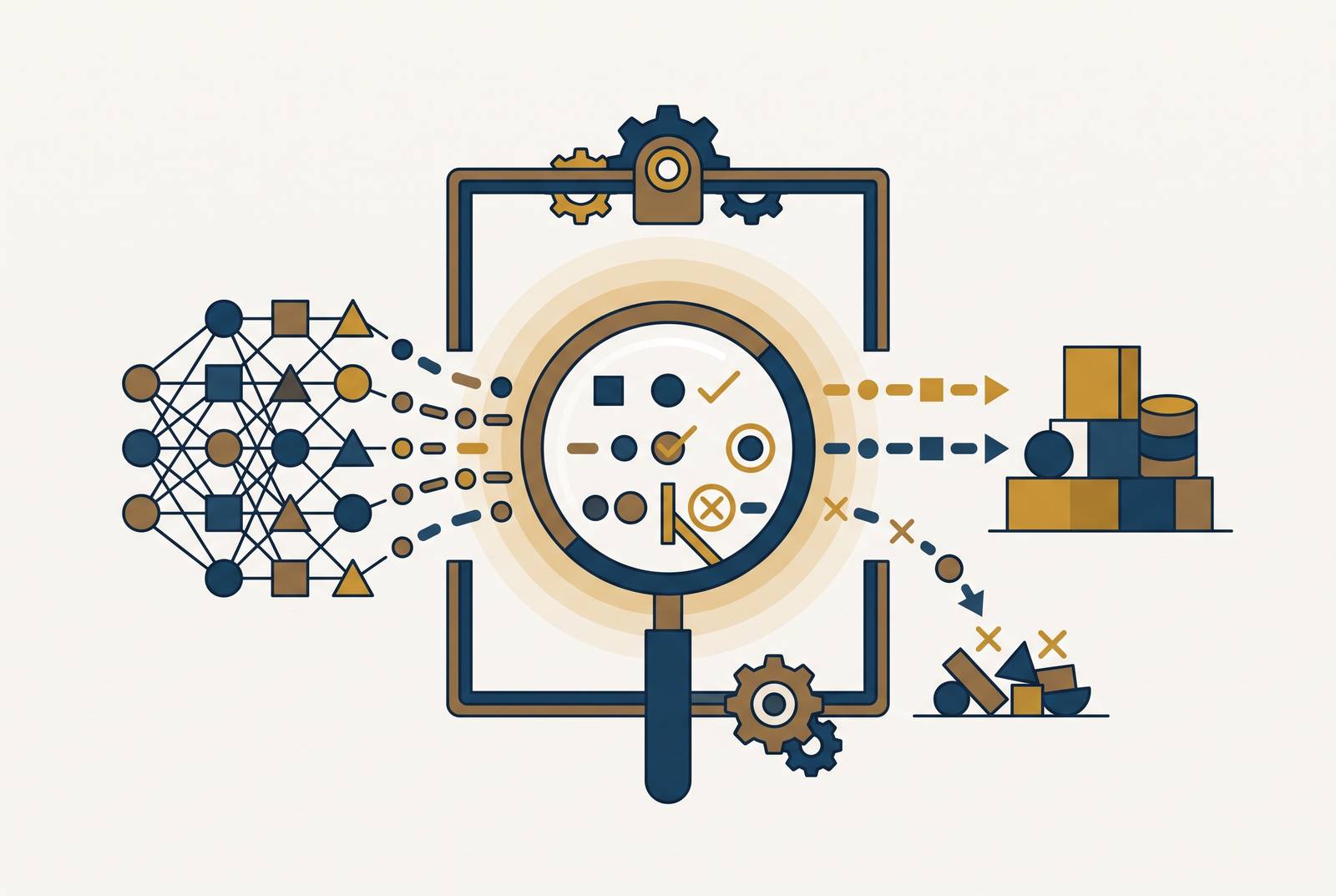
Auditing training data integrity is turning into one of the harder problems in AI governance, and most organizations are behind on it. The discipline covers data lineage, provenance, bias testing, access controls, and governance documentation, and it has to be built into how a model gets developed, not bolted on after the model is already answering customer questions.
The compliance gap here is not theoretical. Kiteworks' 2026 Data Security and Compliance Risk Forecast found that 78% of organizations cannot validate data before it enters AI training pipelines, 77% cannot trace training data provenance, and 33% have no audit logs. At the same time, more than 80% of employees are using AI tools their employer never approved, while only 37% of organizations have a formal AI governance policy in place. That gap between adoption and oversight, shadow AI running loose while governance lags behind, is exactly where regulators are now aiming.
Why does this matter more for AI than for any other software category? Traditional security architecture assumes deterministic behavior: same input, same output, every time. Machine learning models are probabilistic rather than deterministic. They're probabilistic. Feeding a model the same prompt twice can produce two different answers, and that single fact breaks a lot of the control logic that classic IT audits were built around. The attack surface has grown to match: training data an adversary can poison, model weights an insider can walk out the door with, inference endpoints exposed to prompt injection, and the layer where humans just trust the AI's output without checking it, which creates its own kind of automation risk.
Organizations built these systems fast. Audit infrastructure and governance programs did not keep pace, and that mismatch is now precisely where regulatory enforcement is concentrating. So the organizing question for the rest of this piece is straightforward: what does a rigorous training data audit actually look at, and what evidence does it need to produce?
The regulatory framework now demanding verifiable training data evidence
The EU AI Act sets the highest bar currently on the books. High-risk AI systems, meaning things like hiring tools, credit scoring, and biometric identification, carry fines up to €15 million or 3% of global annual turnover for non-compliance. Timing matters here: transparency obligations under Article 50 became enforceable August 2, 2026. The European Commission states that the Annex III obligations, covering standalone high-risk AI systems, don't become enforceable until December 2, 2027, following a Digital Omnibus on AI that entered into force July 27, 2026. Those Annex III requirements, once active, cover risk management, data governance, logging, and human oversight.
Translated into audit language, that means five categories of documentation have to exist: technical documentation covering system architecture, a description of the training data, risk management procedures, accuracy metrics, and data governance records showing training and validation data was checked for bias, coverage gaps, and discriminatory outcomes, with the remediation steps written down.
The federal picture is messier. Texas, California, and Illinois each enforced state-level AI statutes between January and June 2026, requiring various AI disclosures. Colorado repealed its original AI law and replaced it in May 2026 with a framework that won't take effect until January 2027. No single one of these statutes uniformly requires disclosure of both training-data sources and algorithmic logic, so there's no clean federal standard, just overlapping and sometimes contradictory state obligations.
Financial services got its own voluntary framework, released by a national treasury department. Treasury's Financial Services AI Risk Management Framework, released February 19, 2026. It was built by the Cyber Risk Institute working with FSSCC and FBIIC, with input from more than 100 financial institutions, and it lays out 230 control objectives across four functions adapted from the NIST AI RMF.
Industry projections suggest more than half of large enterprises will face mandatory AI compliance audits by 2026, and more than 25 countries have introduced or enacted AI-specific legislation since 2023. Regulators are governing the data, not the model. Whether an organization is in scope isn't determined by which AI vendor or tool it uses. It's determined by what data the system touches and whether governance of that data can be proven. Four technical controls now show up across nearly every framework touching AI data access: authenticated least-privilege access, FIPS-validated encryption, tamper-evident audit logging, and documented training data provenance.
What data lineage and provenance audits examine
Lineage and provenance sound like synonyms. They're not. Lineage tracks data from its original source through every transformation, aggregation, and feature-engineering step that produces the final training set. Provenance answers a narrower question: where did this data come from, and who authorized using it?
Most traditional audit trails were never built to capture how training data actually shapes model behavior. That leaves organizations unable to demonstrate, credibly, that sensitive information wasn't used inappropriately in training, or that a model won't leak pieces of its training data back out through its outputs.
One concrete example of what end-to-end audit infrastructure for this looks like: US Patent 12,407,707 B2, granted to Plainsight Technologies on September 2, 2025, describes a blockchain-based validation method. Each media item in a training dataset gets a cryptographic hash. A validation node writes the validation record to a distributed ledger, and any downstream system can retrieve and confirm that record's validity without needing to trust a single central authority. The pipeline in that patent covers multiple stages from ingestion through validation, with each step documented in the distributed ledger. Each record carries identifying information, validation criteria, and a validity determination, among other structured fields. Those fields map almost one-to-one onto the provenance documentation regulators are asking for.
Lineage isn't something to check once and file away. Modern AI supply chains pull from public datasets scraped off the internet, pre-trained foundation models sitting in open repositories, and third-party orchestration tools stitched together in production. One compromised dependency anywhere in that chain can corrupt every model retrained downstream of it. Which raises a blunt operational question: if an organization can't reconstruct exactly which data trained which version of a model, can it actually satisfy the EU AI Act's documentation requirements? It can't, and it can't respond credibly to a regulator's inquiry either.
How bias evaluation and fairness testing generate the evidentiary record auditors require
Bias testing isn't a single number an auditor checks off. It requires multiple fairness metrics tracked in parallel, things like demographic parity, equalized odds, and predictive parity, precisely because optimizing a model for one of these can quietly make another one worse. A model tuned to hit demographic parity might drift on equalized odds without anyone noticing until an audit flags it.
Under the EU AI Act, reviewing training data for bias, coverage gaps, and discriminatory outcomes, with documented remediation, is mandatory for high-risk systems. It's mandatory. And the thresholds used to judge pass or fail have to be explicit and set in advance. Openlayer's June 2026 guide offers one workable example: flagging a deployment for review if the demographic parity gap exceeds 5%. The threshold itself has to appear in the audit record, along with whether the model passed or failed it.
What separates an audit from a routine internal evaluation is accountability and traceability: a documented record of what got tested, which thresholds applied, what passed, what failed, and who signed off on the result. It's a recurring failure pattern that models clear internal QA and then produce biased outputs once they hit real production traffic, because internal testing missed a fairness gap that only appears against a real user population. That's precisely why documentation has to cover subgroup performance and not just aggregate accuracy. Regulators specifically want to see the gaps across demographic subgroups and protected attributes. And an audit trail that stops at identifying a gap, without documenting what was done about it, is incomplete under current regulatory expectations. Finding the problem isn't the finish line; showing the remediation is.
Access controls and security requirements specific to training data pipelines
Model-level controls, things like a well-crafted system prompt, safety filters, or a vendor's AI certification, are not audit-defensible on their own. Why not? Because a system prompt can be bypassed through prompt injection, silently changed by a model update pushed by the vendor, or worked around through indirect manipulation. Auditors govern the data layer, not the prompt layer, and that distinction shapes what controls actually hold up: a system prompt can be bypassed through prompt injection, silently changed by a model update pushed by the vendor, or worked around through indirect manipulation.
The same four technical controls from the regulatory section apply here at the pipeline level: authenticated least-privilege access, FIPS-validated encryption, tamper-evident audit logging, and documented training data provenance. And the baseline is worse than it should be: 33% of organizations have no audit logs at all, which makes any other compliance claim they might make essentially indefensible. If there's no log, there's nothing to audit.
Shadow AI is itself an access control failure, not a separate category of risk. An employee pasting proprietary source code, legal work product, or regulated customer data into an unapproved chatbot has created a data leakage pathway that no compliance framework is going to excuse after the fact. And logging, meant to be the fix, can become its own liability. One of the most common 2026 AI audit findings is logging raw user prompts that contain regulated data, which turns the control built to create an audit trail into a data-leakage risk if it isn't scoped carefully. Least-privilege access to training data has to be documented, role-based, and reviewable, because auditors will ask exactly who had access, under what authorization, and for how long. With only 37% of organizations having a governance policy in place against 80%-plus AI adoption, most organizations are being asked to audit controls that were never formally defined.
Governance documentation and model versioning an audit needs to find
By 2026, model cards are a standard ask during audits. A model card documents the architecture, intended use, performance metrics, known risks and limitations, and the characteristics of the training data behind it. It's the single artifact that ties technical reality to governance claims.
Model versioning is non-negotiable. Every version of a model needs a tag, a timestamp, an approver, and a deployment record attached to it. If an organization can't reproduce which exact model version handled a given request at a specific point in time, that's a finding, full stop. Four categories of audit trail records have to be timestamped, immutable, and attributable to someone: model versioning records, inference logs, human review records, and evaluation history.
Vendor risk documentation has gotten noticeably more granular. AI-vendor questionnaires in 2026 now ask about model versioning policies, prompt-logging retention schedules, training-data lineage, hallucination handling procedures, the chain of LLM subprocessors involved, and records of AI-literacy training for staff. That last item matters because an LLM provider sits outside an organization's own audit system boundary. It's a subprocessor. Auditing it means assessing vendor risk directly, reviewing the data-retention and training opt-out settings in place, and reading the provider's own independent audit reports rather than taking its marketing claims at face value.
Organizations that treat this documentation as something to write after the fact tend to struggle badly during fieldwork, because auditors now expect AI-specific risk assessments as evidence, not a general IT control narrative that was drafted before the organization adopted any AI.
AIUC-1 and SOC 2 examinations applying these requirements to AI agents and service organizations
No separate AI-specific SOC 2 standard exists yet. Organizations still report against the same five Trust Services Criteria: Security, Availability, Processing Integrity, Confidentiality, and Privacy. What's changed is how those criteria get mapped onto failure modes specific to machine learning systems: training-data poisoning, model theft, performance drift over time, prompt-injected data leakage, and vulnerabilities introduced through subprocessors. Bringing AI into production widens SOC 2 scope to cover the models, the training data, and any automated decision-making systems, and it widens the evidence auditors expect to see, including auditable records for individual AI decisions and automated workflows.
Timing differs sharply between the two SOC 2 report types. A Type I examination takes roughly 1.5 to 3.5 months. A Type II takes considerably longer, because it requires an observation period running anywhere from 3 to 12 months. For AI systems specifically, Type II carries more weight, since it can catch model drift over that observation window, something a point-in-time Type I snapshot would miss.
AIUC-1 is a newer, purpose-built standard for AI agents rather than general service organizations. It defines 51 requirements and 130 controls, split into 65 mandatory and 65 optional, spread across six risk pillars. It was built specifically for agents that carry out multi-step workflows on their own, call external APIs, spawn sub-agents, and operate inside enterprise infrastructure without a human clicking through every step.
Contributors to AIUC-1's development include MITRE, Cisco, academic and industry contributors. Over 120 consortium members, with over 120 consortium members contributing to its Q2 2026 update. The standard came out of stealth in 2025 backed by a $15M seed round with Nat Friedman among the backers. Schellman became the first authorized AIUC-1 auditor on February 3, 2026.
AIUC-1 runs on a quarterly release cadence. The most recent version, released July 15, 2026, updated 8 requirements and 41 controls, with a focus on coding-agent requirements, public auditor guidance, and various clarifications. The next version is due October 15, 2026. The Q2 2026 update, which came before it, covered MCP and A2A protocol security, third-party risk management, and agent identity and access management, touching 14 requirements and 23 controls. On the training-data side specifically, AIUC-1's extended logging now covers the intermediate steps between input and output, meaning tool calls, sub-agent actions, and provenance metadata, so the full execution chain stays traceable end to end. The Q1 2026 update added stronger PII protection in logs, threat modeling built into pre-deployment testing, and coverage for multimodal AI labeling.
AIUC-1 doesn't replace SOC 2, ISO 27001, or GDPR compliance. It builds on top of them, adding an agent-specific governance layer those older frameworks were never designed to address. ISO/IEC 42001, published December 2023, and the NIST AI RMF Generative AI Profile (NIST-AI-600-1, July 2024), commonly get audited alongside SOC 2 as well. The base NIST AI RMF itself draws from a catalog of more than 1,000 controls in NIST SP 800-53, though practical implementation guidance usually narrows that down to the subset addressing the highest-priority risks rather than attempting exhaustive coverage of all thousand.
Training data audits must be built into AI development rather than reconstructed after deployment
The failure pattern that keeps recurring looks like this: pre-launch evaluation confirmed the model worked, it passed the test suite, it hit its performance targets, everyone moved on. Then a regulator asks for bias testing evidence broken out across demographic subgroups, and that evidence was never captured. Or an incident happens and the team has to reconstruct what the model actually did from incomplete logs and whatever anyone happens to remember.
That's the real fork in the road. If audit records get generated as the model actually runs, an audit pulls from a structured, existing source. If they don't, the organization is piecing together an explanation after the fact, and regulators draw a sharp line between those two situations. That distinction is becoming enforceable.
The direction of travel is toward continuous monitoring rather than a single pre-deployment gate. Because poor AI quality can create material risk on an ongoing basis, not just at launch, regulators are increasingly expecting continuous oversight instead of a one-time certification before go-live. AIUC-1's own quarterly re-testing model reflects that shift directly: certified agents get tested against adversarial scenarios on a recurring basis, not assessed once and left alone.
AI and automation have become a genuine focus inside broader audits. Organizations using AI to touch customer data now face pointed questions from auditors about data governance, access authorization, and the guardrails around model output, questions that simply didn't exist in audit programs written before AI adoption took off. Teams that treated model evaluation as a one-time pre-launch checkbox are now rebuilding those processes from scratch to support continuous, evidence-generating audits, and that reconstruction is a considerably more expensive and disruptive path than building the audit infrastructure in from day one would have been.
The starting point ends up being the same regardless of which regulatory framework applies: documented lineage, access controls paired with real audit logs, bias evaluation records with explicit thresholds written down in advance, model versioning that can be reproduced on demand, and governance documentation that exists before a regulator ever asks for it. Firms running financial statement audits, SOC examinations, or dedicated AI assurance engagements are converging on that same list. The organizations that built it early are the ones who won't be scrambling when someone finally asks to see it.